
Echoes of Olympus — The Greek Lineage
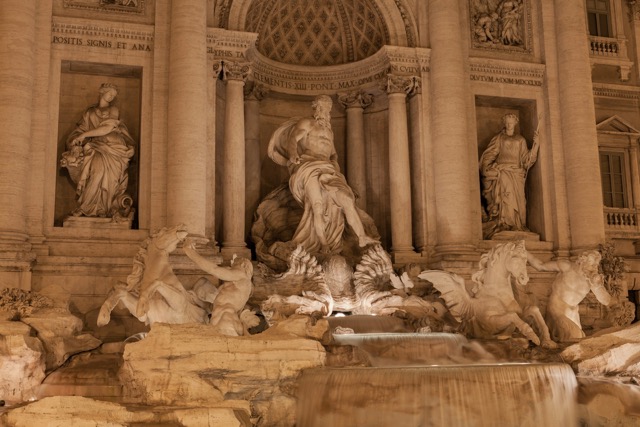
Echoes of Olympus — The Greek Lineage
The Greeks believed that time was not only a cycle, but an echo. The deeds of gods and mortals reverberated across centuries, shaping culture, beauty, and the very notion of legacy. In every column of marble, every amphora of painted clay, and every piece of jewelry buried with care, there is a resonance — a whisper from Olympus itself.
Mythic Jewels’ Greek Lineage emerges from this continuum. Each design is not merely an ornament, but an artifact reborn, a fragment of myth reforged for the present. To wear it is to step into the ancient theatre of gods and philosophers, where beauty was not a luxury but a language of divinity.
The Splendor of Gold in Hellenic Life
Gold was more than a metal to the Greeks. It was helios captured in matter — sunlight shaped into permanence. In Homeric poetry, heroes are “golden” not only in wealth but in their aura, their nobility. Sacred objects, from the statue of Athena Parthenos in the Acropolis to the funerary masks of Mycenae, bore the sheen of gold as a vessel of immortality.
Jewelry served as both adornment and talisman. Necklaces engraved with rosettes, serpentine armlets that coiled with silent power, earrings shaped as lions or sphinxes — these were not mere accessories, but statements of divine kinship. A golden bracelet, to the ancient Greek, was a way of aligning with eternity itself.
It is this sense of gold as destiny that Mythic Jewels preserves. Each piece of the Greek Lineage exists in both 18-carat and 22-carat forms, echoing the ancient duality of form and spirit — one forged for resilience, one for purity.
The Dialogue of Myth and Craft
The Greek pantheon has never ceased to inspire makers. Hephaestus, god of the forge, labored in fire and shadow, creating weapons of beauty for gods and heroes. Aphrodite wore girdles wrought with enchantment. Even Zeus himself commanded tokens of power — thunderbolts cast with a smith’s precision.
For the artisans of Mythic Jewels, this mythology is not abstract. It is a dialogue across centuries. By studying museum collections, excavated relics, and forgotten fragments of Hellenic craft, each design becomes a resonance rather than a replica. The process is meticulous: proportion measured to ancient standards, motifs drawn from amphorae and frescoes, finishes designed to hold the warmth of touch.
To own such a piece is to carry with you not only history, but myth — a talisman of continuity between ancient Olympus and the present moment.
Jewelry as a Vessel of Memory
Empires rise, empires fall, but jewelry endures. Gold does not tarnish, and with it stories do not fade. A ring unearthed after two millennia still bears the warmth of the hand that once wore it. This permanence, this resistance to time, is what makes jewelry the truest vessel of memory.
The Greek Lineage was imagined not as a collection of ornaments, but as a constellation. Each piece is a star, carrying the myth of a hero, a goddess, a forgotten empire. When combined, they form a map — a golden cartography of Greek civilization, reframed for the modern collector.
Echoes That Become Present
In a world of fleeting trends, the Greek Lineage insists on slowness. Its value lies not in novelty, but in timeless return. Every curve, every motif, every weight of gold has been chosen to echo the eternal, not the temporary.
To wear it is to remember: the theatre masks of Dionysus, the victory wreaths of Olympia, the silent temples on sunlit cliffs. It is to let the voices of an ancient world accompany your present, not as ghosts, but as companions.
The Echoes of Olympus are not confined to history books or museum walls. They live again in the jewelry that passes from hand to hand, generation to generation. The Greek Lineage by Mythic Jewels is an invitation to join that lineage — to wear myth as memory, and memory as eternity.
For in gold, as the Greeks believed, nothing truly fades.